The Practice of Regular Budget Review
Educational Notice: This article describes common budget review practices for informational purposes only. Not financial advice.
Many people who maintain personal budgets establish regular practices for reviewing and updating their financial plans as circumstances change.
Purpose of Budget Reviews
Budget reviews serve several purposes in personal finance management. They provide opportunities to compare actual spending with planned amounts, identify changes in income or expenses, and adjust plans based on new information or priorities.
Regular reviews help ensure that budgets remain relevant to current circumstances rather than becoming outdated snapshots of past situations.
Review Frequency
People review their budgets at different intervals. Common frequencies include monthly reviews, quarterly check-ins, or semi-annual assessments. Some individuals conduct brief weekly reviews alongside more comprehensive monthly or quarterly deep dives.
The appropriate frequency depends on personal circumstances. Someone with highly variable income might review more frequently than someone with stable, predictable earnings.
What Reviews Typically Include
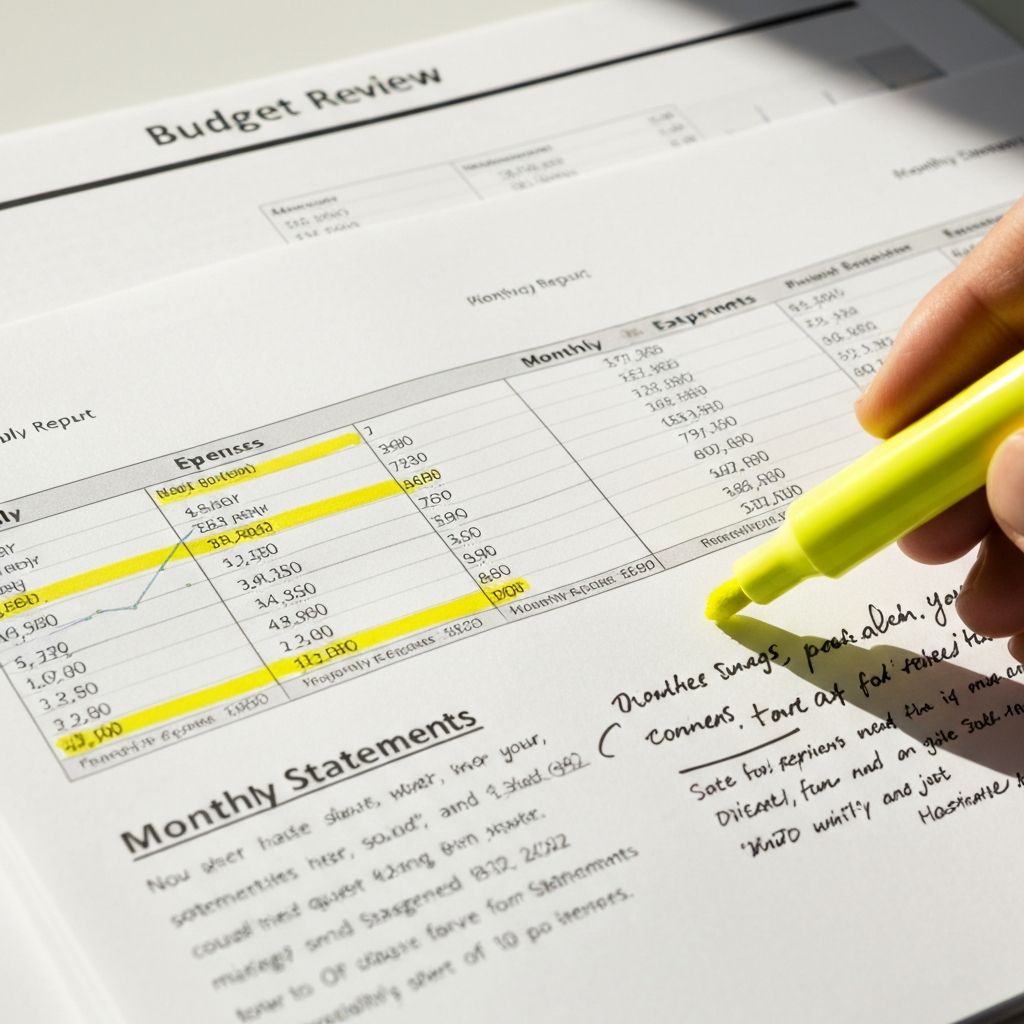
Budget reviews often involve examining actual income received and expenses incurred during the review period. People compare these figures with planned amounts, calculate differences, and consider what those differences reveal.
Reviews might also include assessing whether existing budget categories still make sense, whether income has changed, or whether expense patterns have shifted in ways that warrant budget adjustments.
Identifying Changes
Life circumstances change, and budget reviews provide opportunities to recognize these changes and their financial implications. New expenses might have emerged, old expenses might have ended, or priorities might have shifted.
Identifying these changes during reviews allows people to update their budgets to reflect current reality rather than continuing with outdated assumptions.
Seasonal Considerations
Many households experience seasonal variations in expenses. Budget reviews help people recognize these patterns and plan accordingly. Heating costs might be higher in winter, summer might bring increased cooling expenses, and holidays often affect spending patterns.
Understanding seasonal variations through regular reviews helps people anticipate and prepare for predictable fluctuations rather than being surprised by them.
Adjustment Decisions
Budget reviews often lead to adjustments in spending plans. People might realize they've been consistently over or under budget in certain categories and adjust those allocations accordingly. Or they might identify new expenses that need to be incorporated into future budgets.
Not every review results in changes. Sometimes a review confirms that the current budget is working well and no adjustments are needed.
Documentation
Many people document their budget reviews in some way. This might involve updating spreadsheets, making notes about observations, or simply recording revised budget amounts. Documentation creates a record that can be referenced in future reviews.
The level of documentation varies based on personal preferences and the complexity of one's financial situation.
Long-Term Perspective
While individual budget reviews focus on recent periods, maintaining review records over time provides a longer-term perspective on financial patterns. People can observe trends, see how their financial situation has evolved, and track progress toward various household financial objectives.
This historical perspective often becomes more valuable as time passes and more review data accumulates.
Making Reviews Sustainable
For budget reviews to be useful, they need to be sustainable practices that people actually maintain. This often means finding a review process that feels manageable rather than overwhelming, choosing tools that are accessible and user-friendly, and scheduling reviews at convenient times.
A simple review process that happens consistently provides more value than an elaborate system that gets abandoned after a few months.